A) 1
B) 2
C) 3
D) 4
E) 6
G) B) and E)
Correct Answer

verified
Correct Answer
verified
A) nematic
B) cholesteric
C) smectic
D) isotropic
E) elastic
G) C) and E)
Correct Answer
verified
A
Correct Answer
verified
A) low temperature
B) spherical molecular shape
C) hydrogen bonding
D) high molecular weight
E) high boiling point
G) C) and D)
Correct Answer
verified
Correct Answer
verified
A) a decrease
B) an increase
C) a modulation
D) an increase or decrease (depending on the semiconductor)
E) no change
G) B) and C)
Correct Answer
verified
Correct Answer
verified
A) ion-induced dipole
B) dipole-induced dipole
C) ion-dipole
D) dipole-dipole
E) dispersion
G) B) and C)
Correct Answer
verified
C
Correct Answer
verified
A) 43.4 kJ/mol
B) 52.5 kJ/mol
C) 70.6 kJ/mol
D) 1.00 × 10² kJ/mol
E) None of these choices are correct.
G) None of the above
Correct Answer
verified
Correct Answer
verified
A) dipole-dipole forces
B) London dispersion forces
C) hydrogen bonding
D) covalent bonds
E) polar covalent bonds
G) B) and D)
Correct Answer
verified
Correct Answer
verified
A) melting and freezing points.
B) vapor pressures of liquids.
C) osmotic pressures of solutions.
D) heats of vaporization at different temperatures.
E) crystal structure.
G) C) and D)
Correct Answer
verified
Correct Answer
verified
A) atomic
B) metallic
C) molecular
D) ionic
E) covalent network
G) A) and C)
Correct Answer
verified
C
Correct Answer
verified
A) In any unit cell of a solid crystal, each face of the cell must have an opposite face which is equal and parallel to it.
B) The faces of a unit cell must all be at angles of 90° to each other.
C) The coordination number of atoms in a close packed metal is 12.
D) The packing efficiency in fcc structures is higher than in bcc structures.
E) The packing efficiency in fcc and hcp structures is the same.
G) B) and C)
Correct Answer
verified
Correct Answer
verified
A) 4
B) 6
C) 8
D) 10
E) 12
G) C) and E)
Correct Answer
verified
Correct Answer
verified
A) dipole-dipole forces.
B) London dispersion forces.
C) hydrogen bonding.
D) ion-dipole interactions.
E) carbon-oxygen bonds.
G) A) and E)
Correct Answer
verified
Correct Answer
verified
A) capillary action
B) surface tension
C) viscosity
D) cohesion
E) specific elasticity
G) C) and E)
Correct Answer
verified
Correct Answer
verified
B) False
Correct Answer
verified
Correct Answer
verified
A) The coordination number of the atoms in the lattice is 8.
B) The packing in this lattice is more efficient than for a body-centered cubic system.
C) If the atoms have radius r, then the length of the cube edge is  8 × r.
D) There are four atoms per unit cell in this type of packing.
E) The packing efficiency in this lattice and hexagonal close packing are the same.
G) A) and D)
Correct Answer
verified
Correct Answer
verified
A) the very high density of mercury as compared with water.
B) the low surface tension of mercury.
C) the greater attraction of mercury atoms to the glass than to each other.
D) the weaker attraction of mercury atoms to the glass than to each other.
E) electrostatic repulsion between the glass and the mercury.
G) B) and E)
Correct Answer
verified
Correct Answer
verified
A) Si
B) S
C) Te
D) Bi
E) Br
G) A) and E)
Correct Answer
verified
Correct Answer
verified
A) X-ray diffraction.
B) infrared spectroscopy.
C) ultraviolet-visible spectroscopy.
D) microwave spectroscopy.
E) magnetic resonance imaging.
G) C) and D)
Correct Answer
verified
Correct Answer
verified
A) 
B) 
C) 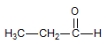
D) 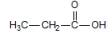
E) 
G) A) and E)
Correct Answer
verified
Correct Answer
verified
A) a decrease
B) an increase
C) an increase or decrease (depending on the conductor)
D) a modulation
E) no change
G) A) and E)
Correct Answer
verified
Correct Answer
verified
Showing 1 - 20 of 90
Related Exams